Highlights of Super Bloom from the Lower Elevations
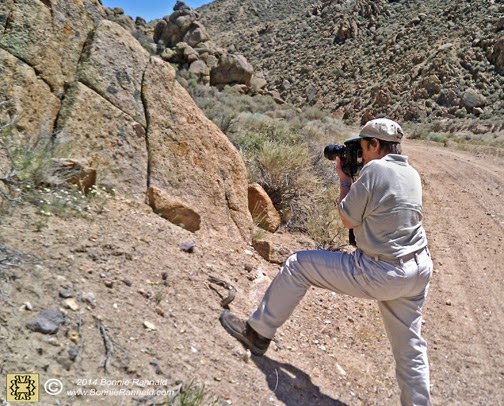
What better time for a nature photographer to be in a national park than during a rare super bloom of wildflowers. Thus was my experience during February 2016 when I traveled to Death Valley National Park to photograph the 20 species of desert wildflowers in different stages of bloom. An El Niño weather pattern has been bringing more rain and snow to the American West. When the rains come more evenly spaced during the winter and spring, flower seeds that have been lying dormant for years will spring to life. This rare occurrence of multiple flowers blooming at around the same time in Death Valley has been coined a “Super Bloom”.

In my first blog post "2016 Death Valley Wildflower Super Bloom", I highlighted the locations where the flowers were growing in the largest numbers. On Part 2 of 3, I will focus on some of my favorite individual flowers that caught my attention.

The first wildflowers to bloom were in the southern part of Death Valley, where the elevation is lowest, 279 feet (85 m) below sea level and the temperatures are warmer. Along the Badwater Road and as far as the eyes could see were fields of Desert Gold.

The Desert Gold (Geraea canescens) is an annual that grows on a tall, branching stalk and is commonly known as the Desert Sunflower. The flowers can last from February to May with sufficient rainfall.

Mixed in with the Desert Gold was the more subtle crème color of Brown-eyed Evening Primrose (Camissonia claviformis).

Brown-eyed Evening Primrose (Camissonia claviformis) is an annual white to pink flower with dark brown center and stigma that hangs out beyond the petals. It blooms in early spring, however at this early date in February, many of the Brown-eyed Evening Primrose flowers had already begun to bolt.


This purple to lavender annual desert flower has several different names. In the Borage family, it is also known as wild heliotrope.

It is also known as Scorpionweed due to the flower growing in a curl that resembles a scorpion’s tail. As beautiful as the Purple Notchleaf Phacelia is, it is best enjoyed from a safe distance because physical contact may result in a rash or contact dermatitis. So far, I have not developed any skin problems while photographing this flower.

To really enjoy the wildflowers one must take a walk along a wash and look closely at all the different types of flowers. However, as the park rangers remind us, please be careful not to step on any of the plants.

While I was busy focusing on a nice group of purple Phacelia, I just happened to notice one of the more subtle flowers in Death Valley, the small white blooms of Gravel Ghost!

The Gravel Ghost (Atrichoseris platyphylla) is in the dandelion family and for such a small flower; it has the most wonderful fragrance of cinnamon vanilla spice. It is also known as the Parachute Plant because the flowers seem to float in the breeze.

An accent of purple at ground level catches my eye and the Purple Mat (Nama demissum) is growing well on the east side of Badwater Road.

Purple Mat is also known as a "Belly flower" because you must get down on your belly to enjoy its beauty.
Many desert plants have developed unique adaptations to exist in such extreme environments and keeping a low profile helps to prevent the Purple Mat from drying out in the hot sun.

This concludes Part 2 of my Death Valley Super Bloom post where I have highlighted a few of the flowers in the southern part of the Park. On Part 3, I will focus on the flowers that I found in the higher elevations. So follow my Blog and check back to see what's blooming.
In my first blog post "2016 Death Valley Wildflower Super Bloom", I highlighted the locations where the flowers were growing in the largest numbers. On Part 2 of 3, I will focus on some of my favorite individual flowers that caught my attention.
The first wildflowers to bloom were in the southern part of Death Valley, where the elevation is lowest, 279 feet (85 m) below sea level and the temperatures are warmer. Along the Badwater Road and as far as the eyes could see were fields of Desert Gold.
The Desert Gold (Geraea canescens) is an annual that grows on a tall, branching stalk and is commonly known as the Desert Sunflower. The flowers can last from February to May with sufficient rainfall.
Mixed in with the Desert Gold was the more subtle crème color of Brown-eyed Evening Primrose (Camissonia claviformis).
Brown-eyed Evening Primrose (Camissonia claviformis) is an annual white to pink flower with dark brown center and stigma that hangs out beyond the petals. It blooms in early spring, however at this early date in February, many of the Brown-eyed Evening Primrose flowers had already begun to bolt.
Purple Notchleaf Phacelia flowers were showing well on the west side of Badwater Road.
This purple to lavender annual desert flower has several different names. In the Borage family, it is also known as wild heliotrope.
It is also known as Scorpionweed due to the flower growing in a curl that resembles a scorpion’s tail. As beautiful as the Purple Notchleaf Phacelia is, it is best enjoyed from a safe distance because physical contact may result in a rash or contact dermatitis. So far, I have not developed any skin problems while photographing this flower.
To really enjoy the wildflowers one must take a walk along a wash and look closely at all the different types of flowers. However, as the park rangers remind us, please be careful not to step on any of the plants.
While I was busy focusing on a nice group of purple Phacelia, I just happened to notice one of the more subtle flowers in Death Valley, the small white blooms of Gravel Ghost!
The Gravel Ghost (Atrichoseris platyphylla) is in the dandelion family and for such a small flower; it has the most wonderful fragrance of cinnamon vanilla spice. It is also known as the Parachute Plant because the flowers seem to float in the breeze.
An accent of purple at ground level catches my eye and the Purple Mat (Nama demissum) is growing well on the east side of Badwater Road.
Purple Mat is also known as a "Belly flower" because you must get down on your belly to enjoy its beauty.
Many desert plants have developed unique adaptations to exist in such extreme environments and keeping a low profile helps to prevent the Purple Mat from drying out in the hot sun.
This concludes Part 2 of my Death Valley Super Bloom post where I have highlighted a few of the flowers in the southern part of the Park. On Part 3, I will focus on the flowers that I found in the higher elevations. So follow my Blog and check back to see what's blooming.

What
an exciting and interesting photo-adventure this day has been. I love
it when I am drawn to an area and not knowing what to expect I get
treated to new experiences.
Sign up and follow my blog to see where my next photo-adventure will be!
Photography places me in the moment where I can share that moment in time. It becomes a life story as represented by my interaction with the scene. The happiness and beauty or the sorrow and strife; how I focus leaves a lasting impression that might touch the viewer on a spiritual level.
"Reflecting Nature's Artistry"
No images on this blog are within Public Domain or are available for free download.
All rights reserved, world-wide and images protected by Digital
Millennium Copyright Act (DMCA). All photography, graphics, text,
design, and content is copyrighted by Bonnie Rannald and should not be
copied, down-loaded, transferred and re-created in any way without the
express consent, in writing to Bonnie Rannald.
For information on Bonnie Rannald licensed, right-managed images, please
submit a written request.