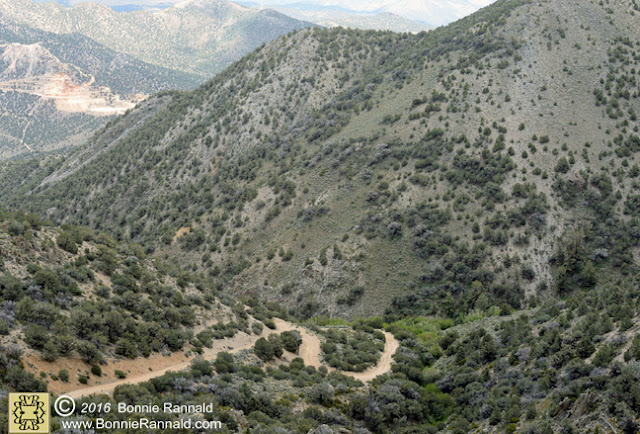
Sunday, July 24, 2016

Desert Oasis at Fletcher Stage Stop


Cool stream, wildflowers and a screaming hawk 

What could be a better way to escape the July desert heat than spending the day at a real oasis under tall cottonwood trees with a running stream and watercress growing every?  


http:www.bonnierannald.com


This desert oasis was once a stage stop known as Fletcher.  From 1883 to 1919 this remote area connected the thriving mining camp of Aurora to the rail line at Hawthorne, Nevada.


http:www.bonnierannald.com


As I wander along the cool stream on this hot summer day, I can imagine how people might also have enjoyed a refreshing pause during their travels with the tall shade trees and fresh, cool clear water. 
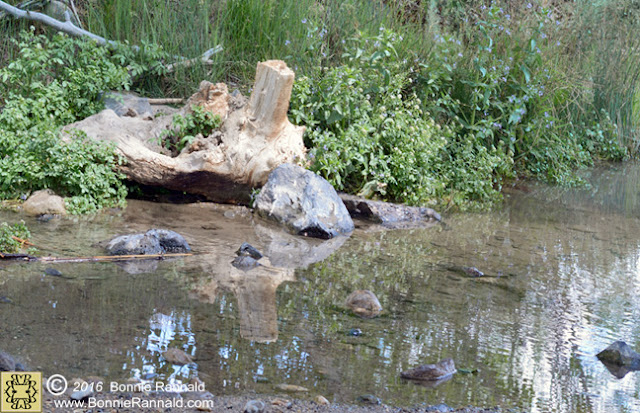

http:www.bonnierannald.com


Much to my surprise, a number of flowering plants were growing in the marshy soil and along the sandy bank.  


http:www.bonnierannald.com


Wild watercress seemed to be thriving in abundance.  Acknowledged as one of the oldest edible green plants consumed by humans,  Nasturtium officinale is prized today for its nutrient rich leaves and stems. 


http:www.bonnierannald.com


Delicate violent flowers of American Speedwell Veronica americana mixed in with the watercress.  This wild beauty is edible, rich in nutrients, has medicinal qualities and a taste similar to watercress.  


http:www.bonnierannald.com


 Several clusters of yellow sand verbena Abronia latifolia stood out on the sandy bank with the native grass.


http:www.bonnierannald.com


Small trumpet flowers of Yellow Monkeyflower Mimulus guttatus grew in the shade.


http:www.bonnierannald.com


Just when I thought my day could not bring me more photo-adventures in nature, over head I heard a piercing scream.  Looking up, a red-tailed hawk was flying in over the trees.  As fast as I could aim my camera, a black bird came in fast pursuit of the hawk.


http:www.bonnierannald.com


I managed to get several clicks of the shutter before the screaming raptor was chased away.  


http:www.bonnierannald.com


The stage stop at Fletcher has become on of my favorite photo retreats, whether it is in summer or winter.  What great diversity in a natural landscape with such a peaceful setting.  Follow my blog and subscribe to my posts while I bring you along on more of my photo-adventures.   


What an exciting and interesting photo-adventure this day has been.  I love it when I am drawn to an area and not knowing what to expect I get treated to new experiences. 

Sign up and follow my blog to see where my next photo-adventure will be!


Photography places me in the moment where I can share that moment in time. It becomes a life story as represented by my interaction with the scene. The happiness and beauty or the sorrow and strife; how I focus leaves a lasting impression that might touch the viewer on a spiritual level.


 "Reflecting Nature's Artistry" 


Many of these images are available on my website:

 http://www.bonnierannald.com/ 

For custom matted and framed images:
Off The Wall


No images on this blog are within Public Domain or are available for free download. 

 All rights reserved, world-wide and images protected by Digital Millennium Copyright Act (DMCA). All photography, graphics, text, design, and content is copyrighted by Bonnie Rannald and should not be copied, down-loaded, transferred and re-created in any way without the express consent, in writing to Bonnie Rannald. For information on Bonnie Rannald licensed, right-managed images, please submit a written request.


Wednesday, June 29, 2016

Revolution of Summer


Artist Exhibition and Reception, New York City

 It is with great honor that my Nevada Nature Photography has been selected to exhibit with other talented artists at the "Revolution of Summer" in New York City from June 30 ~ July 3, 2016.  LOFT 227
227 W. 29th St. 4F.  


http://www.bonnierannald.com


When I was invited to exhibit in the "Revolution of Summer" Curator Lyza Sahertian requested that I select five images that best represent me as a Nevada Photographer.  After much thought I selected the following photographs that have special meaning of Nevada to me:

“Quiet Retreat”:  In Nevada, the seasonal transition from winter to spring and then to summer is often so unpredictable on the east side of the Sierra Crest  The days warm and then a cold front moves in from the Pacific, lowering the temperatures.  Sometimes the landscape is covered with icy freezing fog. 

Solstice Moon:  The full moon rising over the mountains in Nevada has always been one of my most favorite subjects to photograph, especially when it appears bigger than life over the Gillis Mountain Range and dazzling across the water at Walker Lake, Nevada   

Summer Storm:  A lightning storm in the desert is an awesome show of Nature's pyrotechnics.  This rare event was photographed over the Spring Mountains, near Las Vegas.

Walker Lake Wildhorses:  A herd of wild horses run along the shore at Walker Lake, Nevada.  These wild horses were saved from being rounded up and now roam free in their on habitat at the south end of the lake. 

The Challenge:  As spring revolves to summer, two wild stallions are feeling frisky and up for a challenge at Cold Creek, Nevada.  The wild horse is as much an icon of Nevada as the snow-capped mountains and desert landscape.

Thank you Curator Lyza Sahertian for giving me the opportunity to showcase my nature photography and my adopted state of Nevada.

If you are in New Your, I invite you to come and enjoy the exhibition.


 Reception June 30th, 7~9pm


What an exciting and interesting photo-adventure this day has been.  I love it when I am drawn to an area and not knowing what to expect I get treated to new experiences. 

Sign up and follow my blog to see where my next photo-adventure will be!


Photography places me in the moment where I can share that moment in time. It becomes a life story as represented by my interaction with the scene. The happiness and beauty or the sorrow and strife; how I focus leaves a lasting impression that might touch the viewer on a spiritual level.


 "Reflecting Nature's Artistry" 


Many of these images are available on my website:

 http://www.bonnierannald.com/ 

For custom matted and framed images:
Off The Wall


No images on this blog are within Public Domain or are available for free download. 

 All rights reserved, world-wide and images protected by Digital Millennium Copyright Act (DMCA). All photography, graphics, text, design, and content is copyrighted by Bonnie Rannald and should not be copied, down-loaded, transferred and re-created in any way without the express consent, in writing to Bonnie Rannald. For information on Bonnie Rannald licensed, right-managed images, please submit a written request.


Monday, June 27, 2016

Great Basin Wildflowers on the Drive to Corey Peak


Catching the wildflowers before the summer heat 


Locating the sometimes allusive wildflowers in the Great Basin Desert for photos can be a tricky task.  Most often it comes down to getting lucky with Mother Nature.  Although the Great Basin Desert is noted as a cold desert, the sun is hot and will bake the rocky soil in a matter on minutes.

http://www.bonnierannald.com


What fascinates me with desert wildflowers, along with the fragile beauty, is their tenacity and miracle of adaptation in these harsh environments.  A rocky landscape hardly seems the ideal place for wildflowers to thrive.  However, the Woolly groundsel (Packera cana) in the aster family benefits from growing near rocks due to the mulching effect from the rocks to retain moisture.  

http://www.bonnierannald.com


With the El Nino weather pattern bringing more rain and snow during the winter and spring of 2016, many of the wildflower seeds that were lying dormant have sprung to life.  To take advantage of this rare opportunity, I have been traveling to areas that I hope will have different types of wildflowers that adapt to the elevations.

One area that I recently visited was the mountainous area of Cory Peak.  Located on the east side of the Wassuk Range and to the east of the Sierra Nevada Mountains, Cory Peak stands at 10,520 foot, 3206 meter elevation.  I found that a number of flowering plants were already past their bloom. 

http://www.bonnierannald.com


The white flowers of this large Sierra Mountain Misery shrub had dried up and turned a rusty red color. 

http://www.bonnierannald.com

Mountain Misery or Chamaebatia foliolosa was so named by the miners because of its strange odor and that it seemed to grow everywhere.  Many Native American Tribes valued the plant as a remedy for treating various illness.

Pale yellow flowers of Bitterbrush, one of the first shrubs to bloom in the spring, was in various stages of bloom.  The shrub gives off a pleasant spicy, cinnamon fragrance and provides sustenance for deer and other types of wildlife. 

http://www.bonnierannald.com


Deep purple, thick clusters of Pursh's  Milkvetch (Astragalus purshii)  accented many areas in the disturbed rocky soils. 

http://www.bonnierannald.com


Newberry's Milkvetch with pink-lavender flowers in the Fabaceae family were showing off in the gravelly areas.

http://www.bonnierannald.com


Flowering in the open flat areas at mid-elevations Nuttall's Linanthus (Leptosiphon nuttallii)  of the Phlox genus was adding a delicate touch to the rugged terrain.  

http://www.bonnierannald.com


Accents of bright yellow with the Sulphur buckwheat (Eriogonum umbellatum) a species of wild buckwheat stood out at the mid-elevations.   

http://www.bonnierannald.com


A foreboding looking plant, the Granite prickly phlox (linanthus pungens), was just beginning its bloom in the higher elevation washes.
http://www.bonnierannald.com


One of the largest shrubs of Mormon tea that I have encountered was taking up a huge space along the road-side.  The unique plant appears to have no leaves, just jointed leafless branches.  The branches have been used for medical purposed by numerous peoples; including the Mormon Settlers from which its name is derived.   
http://www.bonnierannald.com

During the month of July, most of the wildflowers at lower elevations will succumb to the desert heat.  Locating these desert wildflowers to me is like being a kid on a treasure hunt, it's so exciting to see what nature creates like with this bouquet of  Desert Paintbrush and Milkvetch.

http://www.bonnierannald.com


Follow my blog to see where my next Photo-adventure takes me.  However till then, if you happen to be in the New York area from June 30th. through July 3rd. stop by and see my photography in the "Revolution of Summer" Exhibition, Curated by Lyza Sahertian NYC ArtHouse; LOFT 227, 227 W. 29th St. 4F New York City.  Reception June 30th, from 7 to 9pm.


What an exciting and interesting photo-adventure this day has been.  I love it when I am drawn to an area and not knowing what to expect I get treated to new experiences. 

Sign up and follow my blog to see where my next photo-adventure will be!


Photography places me in the moment where I can share that moment in time. It becomes a life story as represented by my interaction with the scene. The happiness and beauty or the sorrow and strife; how I focus leaves a lasting impression that might touch the viewer on a spiritual level.


 "Reflecting Nature's Artistry" 


Many of these images are available on my website:

 http://www.bonnierannald.com/ 

For custom matted and framed images:
Off The Wall


No images on this blog are within Public Domain or are available for free download. 

 All rights reserved, world-wide and images protected by Digital Millennium Copyright Act (DMCA). All photography, graphics, text, design, and content is copyrighted by Bonnie Rannald and should not be copied, down-loaded, transferred and re-created in any way without the express consent, in writing to Bonnie Rannald. For information on Bonnie Rannald licensed, right-managed images, please submit a written request.


Thursday, June 23, 2016

Wildflowers bloom on Summer Solstice at Corey Peak, Nevada


Delicate flowers bring gentle beauty to a rugged mountain pass


My quest to record photographically the rare occurrence of desert wildflowers that bloom in the spring has taken me to very remote and interesting locations.  Timing is critical and best planned after there has been some rain.  However, trekking out on dirt roads after a desert rain can be tricky and must be approached with caution.
http://www.bonnierannald.com


On a calm, fair weather day, just before Summer Solstice, I made a day trip to Corey Peak in search of wildflowers.  Corey Peak is the second highest summit in the Wassuk Range, at 10,520 foot elevation (3206 m) and lies to the east of the Sierra Nevada Mountains.

http://www.bonnierannald.com


After turning off from Lucky Boy Pass. the road to Corey Peak is not as well maintained or as wide as the  Lucky Boy Pass road.

http://www.bonnierannald.com


Ascending higher, the road becomes narrow with large rocks and ruts that must be carefully negotiated.

http://www.bonnierannald.com


Looking down at the switchbacks that made for an interesting and challenging drive!

http://www.bonnierannald.com


The view from the summit is breath-taking with dormant volcano peaks rising  up and the  Sierra Nevada Mountains with traces of snow in the background.

http://www.bonnierannald.com


To my delight as I climbed in elevation, I began to see clusters of wildflowers on both sides of the winding road that were thriving in the rocky terrain.  The fragrant, yellow flowers of Bitterbrush seemed to be everywhere, creating a garden setting in the rugged landscape.

http://www.bonnierannald.com


The Desert Milkvetch was in full bloom, with its pale purple flowers.

http://www.bonnierannald.com


The deeper purple Newberry's Milkvetch shared its space with yellow flowers of Woolly Grandsel.

http://www.bonnierannald.com


A beautiful bouquet of red Paintbrush accented with lavender Milkvetch flowers stood out against green and grey desert plants. What an arrangement of nature's artistry!

http://www.bonnierannald.com


As the day progressed, clouds started moving in from the west.  I was thankful for the diffused lighting, however I also had to keep a close watch on the weather changes these clouds might bring.  Driving down this narrow, rocky road in a downpour would be next to impossible.

http://www.bonnierannald.com


Rounding a curve and I noticed a graphic rock-outcropping.  I  stopped for a photo and the  the moon began to rise in the east, coming up behind the rocks.  Feeling at peace with this awesome landscape, I imagined welcoming the summer solstice with the ancient ones.  What a fun and inspirational adventure this wildflower quest turned out to be.

http://www.bonnierannald.com


Check back and follow my blog where I will be posting more details about the wildflowers from my Corey Pass Wildflower photo shoot.

http://www.bonnierannald.com


What an exciting and interesting photo-adventure this day has been.  I love it when I am drawn to an area and not knowing what to expect I get treated to new experiences. 

Sign up and follow my blog to see where my next photo-adventure will be!


Photography places me in the moment where I can share that moment in time. It becomes a life story as represented by my interaction with the scene. The happiness and beauty or the sorrow and strife; how I focus leaves a lasting impression that might touch the viewer on a spiritual level.


 "Reflecting Nature's Artistry" 


Many of these images are available on my website:

 http://www.bonnierannald.com/ 

For custom matted and framed images:
Off The Wall


No images on this blog are within Public Domain or are available for free download. 

 All rights reserved, world-wide and images protected by Digital Millennium Copyright Act (DMCA). All photography, graphics, text, design, and content is copyrighted by Bonnie Rannald and should not be copied, down-loaded, transferred and re-created in any way without the express consent, in writing to Bonnie Rannald. For information on Bonnie Rannald licensed, right-managed images, please submit a written request.


Thursday, April 28, 2016

Ladybugs and their Life Cycle


Photo-observations of Ladybugs from larva to pupa to adult beetles


In mid-spring with the greening of the Great Basin Desert, strange tiny alligator-like creatures seem to appear when the Filaree plants begin to grow.  These colorful, fearsome, elongated insects that  cling to walls and scurry along walkways are actually the larval stage of Ladybugs.  


Visit our website at: http://www.bonnierannald.com/


Ladybugs are in fact small beetles, Coccinellidae, that only reach from 2 to 10 millimeters in size.  The Ladybugs or Lady Beetles were given their unique name as legend goes, when many hundred years ago European farmers prayed to the Virgin Mary for help to save their crops from a plague of insects. The tiny red beetles arrived in swarms and began devouring the pests, so they were appropriately named Lady beetles.  Lady beetles were introduced to the U.S. from Europe and became known as Ladybugs.   


Visit our website at: http://www.bonnierannald.com/


Ladybugs are not harmful to humans and are one of the most beneficial critters to have in the garden because they eat aphids, scale insects and plant mites.  As a defense mechanism and to ward off predators, the adult ladybug displays a vivid red shell.  If threatened small drops of blood with a foul odor are released from the leg joints.  


Visit our website at: http://www.bonnierannald.com/


Come spring, the female ladybug lays her eggs on the underside of an especially selected leaf.  In 4 to 10 days, the larvae hatch and begin eating any aphids or other appropriate insects.  They may also eat the egg casing and/or their siblings. 


Visit our website at: http://www.bonnierannald.com/


 The ladybug larva continues to grow and will shed the exoskeleton five to seven times in the larval stage. 


Visit our website at: http://www.bonnierannald.com/


Continuing to develop and between 10 to 14 days, the larva will find a stable structure and affix itself to begin metamorphosis into a lady beetle; this is the pupa stage of the ladybug's life cycle.  


Visit our website at: http://www.bonnierannald.com/


A hard shell protects the pupa during the 7 to 10 day transformation.  

Visit our website at: http://www.bonnierannald.com/


When the young ladybug first emerges from pupa, its body is soft and dull in color.  At this stage it is most vulnerable.

Visit our website at: http://www.bonnierannald.com/

As the beetle develops into an adult ladybug, the shell will harden and become more vibrant in color.  The orange-red color of the shell is a defense mechanism that is perceived as a warning for predators to keep their distance.  

Visit our website at: http://www.bonnierannald.com/

The diet of ladybugs consists not only of small garden pests but also pollen from flowers and water from shallow surfaces.  

In defense of these beneficial garden allies, I have become much more conscientious with my insect and weed control.  A broom takes care of most unwanted creepy crawlers and a sharp hoe removes the weeds.  I get the exercise while the ladybugs do their work.  


Visit our website at: http://www.bonnierannald.com/


With El Nino still in the weather forecast, the Great Basin area of Northern Nevada is getting more rain, so follow my blog and check back often to see where my next photo-adventure takes me. 


Visit our website at: http://www.bonnierannald.com/


For additional information on Lady beetles:

 http://www.todayifoundout.com/index.php/2015/04/ladybugs-called/


What an exciting and interesting photo-adventure this day has been.  I love it when I am drawn to an area and not knowing what to expect I get treated to new experiences. 

Sign up and follow my blog to see where my next photo-adventure will be!


Photography places me in the moment where I can share that moment in time. It becomes a life story as represented by my interaction with the scene. The happiness and beauty or the sorrow and strife; how I focus leaves a lasting impression that might touch the viewer on a spiritual level.


 "Reflecting Nature's Artistry" 


Many of these images are available on my website:

 http://www.bonnierannald.com/ 

For custom matted and framed images:
Off The Wall


No images on this blog are within Public Domain or are available for free download. 

 All rights reserved, world-wide and images protected by Digital Millennium Copyright Act (DMCA). All photography, graphics, text, design, and content is copyrighted by Bonnie Rannald and should not be copied, down-loaded, transferred and re-created in any way without the express consent, in writing to Bonnie Rannald. For information on Bonnie Rannald licensed, right-managed images, please submit a written request.