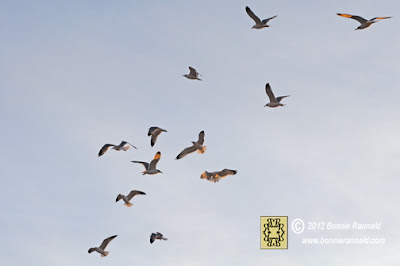
Showing posts with label California Gulls. Show all posts

Thursday, January 29, 2015

Avian Cholera Outbreak at Walker Lake


Walker Lake's Water fowl in peril


Walker Lake, which should stand as a showcase for Nevada has certainly seen much adversity over the years.  The once thriving, natural high desert lake provided the  Agaicutta People (Paiute for Cutthroat Trout)   with food sources that were much more varied and higher in nutrition that our modern diets.   Fish, wildlife, water fowl and vegetation were plentiful and life was good.  Once the settlers started moving in, the Walker River, the main source of water that feeds Walker Lake, was diverted for agriculture usage.  Today, the Walker River is at least 130% over allocated.  As a result, not enough fresh water enters Walker Lake, which has caused the level to drop and the salinity to increase.  Presently, due to the high salt level, the lake is no longer able to support native fish. 

Walker Lake's origin dates back to the Pleistocene epoch, (Ice Age) when Lake Lahontan covered most of what is now the Great Basin Desert.  As the land dried and the climate warmed, Lake Lahontan began to recede, leaving a number of isolated lakes in closed basins, including Walker Lake. 

Not too long ago, Walker Lake was a thriving source of water out in the desert. It was known for the Lahontan Cutthroat Trout which could grow to 40 pounds in size.  Walker Lake was also a major stop-over for migratory birds. Located on the Pacific Flyway, the north-south travel route for American migratory birds, the water and shores provided essential food sources for the birds to rest and refuel.  


http://www.bonnierannald.com


Since the salty lake can no longer support the native fish, many of the seasonal visitors like the Common Loons that used to number in the hundreds no longer stop over at the lake. However a large number of shore birds still make Walker Lake their home, including the California Gull, American Coot, Long billed crulew and even the salt-loving Phalaropes.  


http://www.bonnierannald.com


The latest adversity to hit Walker Lake is an outbreak of Avian cholera that could put the remaining shore birds in great peril.


http://www.bonnierannald.com

  A number of dead birds have been spotted along the shore at Walker Lake.


http://www.bonnierannald.com


  Most of the birds appear to be American Coots. 


http://www.bonnierannald.com


 There was one Mallard that appeared to have washed up on the shore.


http://www.bonnierannald.com


Avian cholera is a disease of fowl, which has crossed over from wild birds to become most prevalent in waterfowl.  The disease is found in wetland areas all across the globe and even North America.  Most of the outbreaks occur during the cold, wet weather of winter.  


http://www.bonnierannald.com

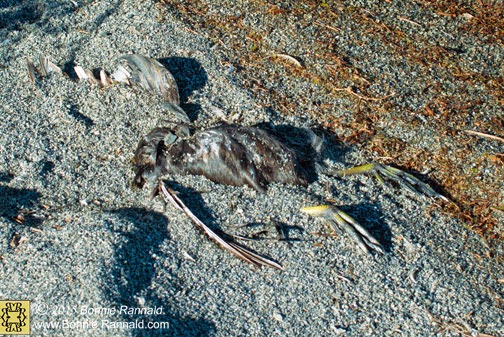
The bodies of several American Coots are caught in the tumbleweeds that line the shore.

Unfortunately once the disease is transmitted, it is almost impossible to contain. The area becomes contaminated with body secretions from diseased birds, which can remain in the water for several weeks.  It is spread by direct contact to birds that are showing various symptoms including mucous draining from the mouth, nasal discharge and blood stained diarrhea. 

http://www.bonnierannald.com


 The bacteria is ingested from contaminated food and even spread by birds scavenging on infected carcasses.  

http://www.bonnierannald.com

Avian cholera is a horrible disease and has been know to kill so quickly that birds literally die while flying and fall from the sky.


http://www.bonnierannald.com

 Infected birds may suffer convulsions, disorientation where they swim in circles, throw their heads around violently and even fly upside down.  


http://www.bonnierannald.com


The only means of containment is prompt removal and proper disposal of the dead carcasses.  I am very concerned at this time how long these birds have been lying dead and how many other birds have become diseased.  Time will surely tell and I do hope with all my being that Walker Lake will not suffer another major loss in its beauty of all the remaining birds the grace her beautiful skies.

http://www.bonnierannald.com


For additional reading:

http://bonnierannald.blogspot.com/2012/02/inland-gulls-of-walker-lake-nevada.html
http://bonnierannald.blogspot.com/2012/08/walker-lake-water-fowl.html
http://www.walkerlakenv.org/articles%204.htm

http://www.nwhc.usgs.gov/disease_information/avian_cholera/


What an exciting and interesting photo-adventure this day has been.  I love it when I am drawn to an area and not knowing what to expect I get treated to new experiences. 

Sign up and follow my blog to see where my next photo-adventure will be!


Photography places me in the moment where I can share that moment in time. It becomes a life story as represented by my interaction with the scene. The happiness and beauty or the sorrow and strife; how I focus leaves a lasting impression that might touch the viewer on a spiritual level.


 "Reflecting Nature's Artistry" 


Many of these images are available on my website:

 http://www.bonnierannald.com/ 

For custom matted and framed images:
Off The Wall


No images on this blog are within Public Domain or are available for free download. 

 All rights reserved, world-wide and images protected by Digital Millennium Copyright Act (DMCA). All photography, graphics, text, design, and content is copyrighted by Bonnie Rannald and should not be copied, down-loaded, transferred and re-created in any way without the express consent, in writing to Bonnie Rannald. For information on Bonnie Rannald licensed, right-managed images, please submit a written request.


Saturday, August 18, 2012

Walker Lake Water Fowl


A Day of Birding at Walker Lake 

Walker Lake is a natural lake lying within the Great Basin Desert that is also on the Pacific Flyway, the north-south travel route for American migratory birds. Fed by the Walker River which has been diverted for agricultural use, the water level of Walker Lake has dropped over 126 feet (38.40 m) from its 1882 elevation of 4083 feet (1244.5 m).  As the lake recedes, salinity increases and has reached a critical level  where the water can no longer support the native, Lahontan Cutthroat Trout.  A smaller fish, the Tui Chub which is a major food source for the Cutthroat Trout and numerous water fowl has also become endangered.


As salty as the lake has become, it still attracts large numbers of birds to its cool, clear waters.  


Large white American Pelicans fly back and forth between Walker and Pyramid Lake on a daily basis in the warm months.  The American Pelican does not dive for food, but catches it while swimming.


Phalaropes or wadepipers are halophilic (salt-loving) shorebirds.  Feeding on small insects or crustaceans, they breed in western North American and migrate to South American.


California Gulls are the state bird of Utah and noted for assisting the Mormon settlers in the plague of Mormon crickets.  They forage in flight on insects and also feed on fish while swimming.


One of the unique characteristics of Walker Lake is the Orb-weaver Spiders that thrive in the hot summer months of July and August.  The spiders set up communal webs that cover the rocks and boulders.  Their favorite food source is the damselfly which can be seen covering part of the webs.  Keeping nature in check, the spiders help feed the shore birds and also the lizards that live around the rocky banks.


What an exciting and interesting photo-adventure this day has been.  I love it when I am drawn to an area and not knowing what to expect I get treated to new experiences. 

Sign up and follow my blog to see where my next photo-adventure will be!


Photography places me in the moment where I can share that moment in time. It becomes a life story as represented by my interaction with the scene. The happiness and beauty or the sorrow and strife; how I focus leaves a lasting impression that might touch the viewer on a spiritual level.


 "Reflecting Nature's Artistry" 


Many of these images are available on my website:

 http://www.bonnierannald.com/ 

For custom matted and framed images:
Off The Wall


No images on this blog are within Public Domain or are available for free download. 

 All rights reserved, world-wide and images protected by Digital Millennium Copyright Act (DMCA). All photography, graphics, text, design, and content is copyrighted by Bonnie Rannald and should not be copied, down-loaded, transferred and re-created in any way without the express consent, in writing to Bonnie Rannald. For information on Bonnie Rannald licensed, right-managed images, please submit a written request.


Monday, August 13, 2012

Mono Lake's Unique Diversity


 Nature Adapts to an Alien Environment 


If you take away the deep blue sky and clear air, Mono Lake has a topography that is as alien as any extra-terrestrial environment.   Born from the eruptions of volcanoes, the tectonic basin of Mono Lake was additionally designed by faulting and down-warping of the earth's crust some one to 3 million years ago.


Mono Craters, domes of rhyolite that exploded from volcanoes during the last 40,000 years and as recently as 700 years ago.


 A natural lake with no outlet, Mono's water has a unique chemistry that makes it saltier than the ocean. Volcanic ash and underwater springs rich in calcium create a mix that make Mono very alkaline.


 The lake can not support fish; however the algae, brine shrimp and alkali flies contribute to a complex ecosystem, attracting millions of birds that come in for nesting and feeding. The black area in the right lower corner is a large concentration of alkali flies.


 Part of the un-worldly appearance of Mono Lake comes from the Tufa towers, strange rock formations that grow underwater from the calcium in the underwater springs that mixes with carbonates in the lake water. Some Tufa towers reach heights over 30 feet, 9.144 meters.


Black Point on the north shore of Mono is one of the volcanic islands that were formed from recent eruptions around 13,000 years ago, when the lake was 400 feet, 121.92 meters deeper than it is today. 


The Mono Basin is nestled in against the Eastern Sierra Nevada Mountain Range, which is also one of the entrances to Yosemite National Park.  A glimpse into this ancient era with so many intriguing explorations yet to uncover will be the focus of future blog posts, so check back often to see what unfolds.


What an exciting and interesting photo-adventure this day has been.  I love it when I am drawn to an area and not knowing what to expect I get treated to new experiences. 

Sign up and follow my blog to see where my next photo-adventure will be!


Photography places me in the moment where I can share that moment in time. It becomes a life story as represented by my interaction with the scene. The happiness and beauty or the sorrow and strife; how I focus leaves a lasting impression that might touch the viewer on a spiritual level.


 "Reflecting Nature's Artistry" 


Many of these images are available on my website:

 http://www.bonnierannald.com/ 

For custom matted and framed images:
Off The Wall


No images on this blog are within Public Domain or are available for free download. 

 All rights reserved, world-wide and images protected by Digital Millennium Copyright Act (DMCA). All photography, graphics, text, design, and content is copyrighted by Bonnie Rannald and should not be copied, down-loaded, transferred and re-created in any way without the express consent, in writing to Bonnie Rannald. For information on Bonnie Rannald licensed, right-managed images, please submit a written request.


Wednesday, February 22, 2012

The Inland Gulls of Walker Lake, Nevada


Sky Riders


I have been asked many times about the birds that are in the skies of my photographs around Walker Lake, so I decided to write this blog post and dedicate it to that bird, the California Gull.


The California or Inland Gull, Larus californicus, falls in the medium size range, averaging 20 inches (47-54 cm) in length with a wingspan of 51 inches (130 cm). These gulls have striking features with white bodies, black primaries and white tips on grey wings, black tipped yellow bills, yellow feet, and brow eyes.


Found in parking lots and lakes from California to Manitoba, the gulls at Walker Lake do not migrate but remain in this area all year long, except during the breeding season, from May to July when the adults return to their breeding grounds at Mono Lake, California.


Insects are a favorite source of food for the California Gull and that is why they are the official state bird of Utah. The California Gull's appetite for insects saved the Mormon settlers during a plague of crickets and today there is a monument in Salt Lake City commemorating this event, which is known as the Miracle of the Gulls. The diet of California Gulls also includes fish, eggs and just about any food that humans will eat except lettuce and tomatoes!


The California Gulls are also known as the "laughing gull" due to the laughing sound that they make when someone walks by and there might be a handout for food.


For more information:

http://en.wikipedia.org/wiki/California_Gull
http://www.allaboutbirds.org/guide/California_Gull/id/ac
http://www.monolake.org/about/ecobirds


Photographs Make Great Gifts


What an exciting and interesting photo-adventure this day has been.  I love it when I am drawn to an area and not knowing what to expect I get treated to new experiences. 

Sign up and follow my blog to see where my next photo-adventure will be!


Photography places me in the moment where I can share that moment in time. It becomes a life story as represented by my interaction with the scene. The happiness and beauty or the sorrow and strife; how I focus leaves a lasting impression that might touch the viewer on a spiritual level.


 "Reflecting Nature's Artistry" 


Many of these images are available on my website:

 http://www.bonnierannald.com/ 

For custom matted and framed images:
Off The Wall


No images on this blog are within Public Domain or are available for free download. 

 All rights reserved, world-wide and images protected by Digital Millennium Copyright Act (DMCA). All photography, graphics, text, design, and content is copyrighted by Bonnie Rannald and should not be copied, down-loaded, transferred and re-created in any way without the express consent, in writing to Bonnie Rannald. For information on Bonnie Rannald licensed, right-managed images, please submit a written request.