Showing posts with label Avian cholera. Show all posts

Wednesday, December 16, 2015

Environmental Photographs Highlight 2015


 Themes and Issues during my photo-explorations

At the year’s end, I usually write about the highlights of my travels or adventures.  However for the finality of 2015 and following the Paris Climate Summit, I have been compelled to feature a photo for each month that has an environmental theme. These photos are from scenes that I have come across during my photo-explorations of the past year, from water issues to weather extremes and compromised ecosystems. The following photographs were taken within a 100 mile radius around Walker Lake, Nevada and in the Great Basin Desert.

Clouds form over Mono Lake, California, moving eastward from the Sierra Nevada Mountains. The receding shore line and lack of snow on the mountains for the month of January are indicators of the drought that continues to plague the western U.S.


http://www.bonnierannald.com


Late January and early February, a large number of waterfowl were infected with Avian cholera at Walker Lake, Nevada. 


http://www.bonnierannald.com


The bodies of American Coots lay tangled in tumble weeds that were blown to the water’s edge by the wind.


http://www.bonnierannald.com


A dust storm churned up by the strong winds of March on east side of Walker Lake, Nevada. 


http://www.bonnierannald.com


A desolate location for Lee Hot Springs with a capped off well and volcanic rocks, however the mountains in the background show lack of snowpack after a dry winter on an early spring day in April. 


http://www.bonnierannald.com


 On a hillside in the Gabbs Valley Range, in May, the top of a purple bottle stands out.  A closer look reveals a piñon pine root that has been growing through the bottle’s neck for no telling how many years.


http://www.bonnierannald.com


A hot June morning and cumulonimbus clouds build over the Garfield Flats Range.  I barely made it out of the wash before the clouds produced a F1 Category Tornado that touched down in Hawthorne, Nevada. 


http://www.bonnierannald.com


With the heat index reaching over the century mark in July at Walker Lake, ecosystems grow out of balance at the water’s edge as numerous damselfly larvae are caught in the huge orb-weaver spider webs that cover most of the shore.


http://www.bonnierannald.com


The receding shore at Soda Lake in August, tufa mounds grow along the edge of the water.  Soda Lake was formed inside the collapsed cone of a basaltic maar volcano by irrigation for agriculture which increased the groundwater.

http://www.bonnierannald.com

A tunnel by the highway to Yerington, Nevada in September.  Rainfall from fast moving summer monsoons produced flash floods that cut deep washes through the dry desert.  


http://www.bonnierannald.com


An October photo-trip to the Wild Burro Range at Marietta, Nevada.  The frame of a windsock stands as a reminder of the harsh winds and extreme weather in the Great Basin Desert. 


http://www.bonnierannald.com


Strong winds in November blow the thin snow pack across the peaks at Mount Grant, Nevada.  


http://www.bonnierannald.com


A winter storm in December brings in much needed moisture; however it will take so much more to offset the receding north shore at Walker Lake, Nevada.  


http://www.bonnierannald.com


The year of 2015 has seen interesting weather patterns with a warmer winter and rising heat index for the summer.  When El Niño comes for the winter, I will be ready with my Nikon to record any interesting trends, so follow my blog and check back often for the new posts.


What an exciting and interesting photo-adventure this day has been.  I love it when I am drawn to an area and not knowing what to expect I get treated to new experiences. 

Sign up and follow my blog to see where my next photo-adventure will be!


Photography places me in the moment where I can share that moment in time. It becomes a life story as represented by my interaction with the scene. The happiness and beauty or the sorrow and strife; how I focus leaves a lasting impression that might touch the viewer on a spiritual level.


 "Reflecting Nature's Artistry" 


Many of these images are available on my website:

 http://www.bonnierannald.com/ 

For custom matted and framed images:
Off The Wall


No images on this blog are within Public Domain or are available for free download. 

 All rights reserved, world-wide and images protected by Digital Millennium Copyright Act (DMCA). All photography, graphics, text, design, and content is copyrighted by Bonnie Rannald and should not be copied, down-loaded, transferred and re-created in any way without the express consent, in writing to Bonnie Rannald. For information on Bonnie Rannald licensed, right-managed images, please submit a written request.


Thursday, January 29, 2015

Avian Cholera Outbreak at Walker Lake


Walker Lake's Water fowl in peril


Walker Lake, which should stand as a showcase for Nevada has certainly seen much adversity over the years.  The once thriving, natural high desert lake provided the  Agaicutta People (Paiute for Cutthroat Trout)   with food sources that were much more varied and higher in nutrition that our modern diets.   Fish, wildlife, water fowl and vegetation were plentiful and life was good.  Once the settlers started moving in, the Walker River, the main source of water that feeds Walker Lake, was diverted for agriculture usage.  Today, the Walker River is at least 130% over allocated.  As a result, not enough fresh water enters Walker Lake, which has caused the level to drop and the salinity to increase.  Presently, due to the high salt level, the lake is no longer able to support native fish. 

Walker Lake's origin dates back to the Pleistocene epoch, (Ice Age) when Lake Lahontan covered most of what is now the Great Basin Desert.  As the land dried and the climate warmed, Lake Lahontan began to recede, leaving a number of isolated lakes in closed basins, including Walker Lake. 

Not too long ago, Walker Lake was a thriving source of water out in the desert. It was known for the Lahontan Cutthroat Trout which could grow to 40 pounds in size.  Walker Lake was also a major stop-over for migratory birds. Located on the Pacific Flyway, the north-south travel route for American migratory birds, the water and shores provided essential food sources for the birds to rest and refuel.  


http://www.bonnierannald.com


Since the salty lake can no longer support the native fish, many of the seasonal visitors like the Common Loons that used to number in the hundreds no longer stop over at the lake. However a large number of shore birds still make Walker Lake their home, including the California Gull, American Coot, Long billed crulew and even the salt-loving Phalaropes.  


http://www.bonnierannald.com


The latest adversity to hit Walker Lake is an outbreak of Avian cholera that could put the remaining shore birds in great peril.


http://www.bonnierannald.com

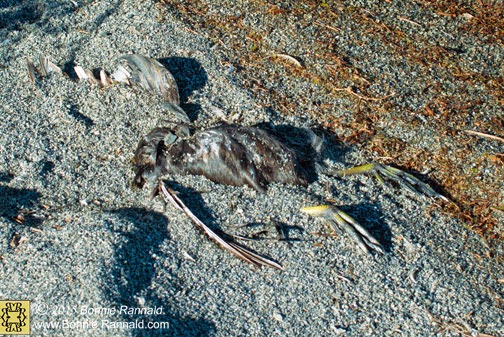
  A number of dead birds have been spotted along the shore at Walker Lake.


http://www.bonnierannald.com


  Most of the birds appear to be American Coots. 


http://www.bonnierannald.com


 There was one Mallard that appeared to have washed up on the shore.


http://www.bonnierannald.com


Avian cholera is a disease of fowl, which has crossed over from wild birds to become most prevalent in waterfowl.  The disease is found in wetland areas all across the globe and even North America.  Most of the outbreaks occur during the cold, wet weather of winter.  


http://www.bonnierannald.com

The bodies of several American Coots are caught in the tumbleweeds that line the shore.

Unfortunately once the disease is transmitted, it is almost impossible to contain. The area becomes contaminated with body secretions from diseased birds, which can remain in the water for several weeks.  It is spread by direct contact to birds that are showing various symptoms including mucous draining from the mouth, nasal discharge and blood stained diarrhea. 


http://www.bonnierannald.com


 The bacteria is ingested from contaminated food and even spread by birds scavenging on infected carcasses.  

http://www.bonnierannald.com

Avian cholera is a horrible disease and has been know to kill so quickly that birds literally die while flying and fall from the sky.


http://www.bonnierannald.com

 Infected birds may suffer convulsions, disorientation where they swim in circles, throw their heads around violently and even fly upside down.  


http://www.bonnierannald.com


The only means of containment is prompt removal and proper disposal of the dead carcasses.  I am very concerned at this time how long these birds have been lying dead and how many other birds have become diseased.  Time will surely tell and I do hope with all my being that Walker Lake will not suffer another major loss in its beauty of all the remaining birds the grace her beautiful skies.

http://www.bonnierannald.com


For additional reading:

http://bonnierannald.blogspot.com/2012/02/inland-gulls-of-walker-lake-nevada.html
http://bonnierannald.blogspot.com/2012/08/walker-lake-water-fowl.html
http://www.walkerlakenv.org/articles%204.htm

http://www.nwhc.usgs.gov/disease_information/avian_cholera/


What an exciting and interesting photo-adventure this day has been.  I love it when I am drawn to an area and not knowing what to expect I get treated to new experiences. 

Sign up and follow my blog to see where my next photo-adventure will be!


Photography places me in the moment where I can share that moment in time. It becomes a life story as represented by my interaction with the scene. The happiness and beauty or the sorrow and strife; how I focus leaves a lasting impression that might touch the viewer on a spiritual level.


 "Reflecting Nature's Artistry" 


Many of these images are available on my website:

 http://www.bonnierannald.com/ 

For custom matted and framed images:
Off The Wall


No images on this blog are within Public Domain or are available for free download. 

 All rights reserved, world-wide and images protected by Digital Millennium Copyright Act (DMCA). All photography, graphics, text, design, and content is copyrighted by Bonnie Rannald and should not be copied, down-loaded, transferred and re-created in any way without the express consent, in writing to Bonnie Rannald. For information on Bonnie Rannald licensed, right-managed images, please submit a written request.