Showing posts with label Lupine. Show all posts

Wednesday, August 22, 2018

2018 Wildflowers in Mono County's Conway Summit


A profusion of blooms in a short stretch of the road!

 
A return visit to Conway Summit a few weeks later in July found even more wildflowers in bloom.  So many different species were thriving at an elevation around 8,143 feet (2,482 m) in a short stretch of the road to Virginia Lake, just off U.S. 395 in Mono County, California.  


Wildflowers in the Conway Summit, California


The first to catch my eyes were the blues, lavenders, and yellows.  


Sulpher Buckwheat, Silvery Lupine, Showy Milkweed


The yellow was Sulfur Buckwheat, Eriogonum umbellatum, a species of wild buckwheat. This  plant was used by Native Americans for a number of medical purposes.  


The blue flowers were the Silvery Lupine, Lupinus argenteus, which is in the legume family.
 

Silvery Lupine, Lupinus argenteus


The lavender-purple was the California Showy Milkweed, Asclepias speciosa, which is a great pollinator for hummingbirds, butterflies, and bees.  The fibers from this plant were used by Native Americans to make ropes, nets and other items.
 

California Showy Milkweed, Asclepias speciosa


Across the road there was a thick cluster of showy red flowers, the Desert Paintbrush, Castilleja chromosa.


Desert Paintbrush, Castilleja chromosa


Desert Paintbrush flowers are edible in small amounts and contain selenium.


Desert Paintbrush, Castilleja chromosa


Small yellow flowers of the Five Finger Cinquefoil, Potentilla erecta, stood out from green, five-parted leaves.  For such a tiny plant, this Cinquefoil has a number of interesting uses.  It offers an important food source to pollinators, rabbits and other wild critters.  Furthermore, its young shoots are eaten with salads and it is even used in magic spells to ward off evil. 


Five Finger Cinquefoil, Potentilla erecta


A nice grouping of Skyrocket or Scarlet gilia, Ipomopis aggregate flowered against the rocky bank of the road.   


Skyrocket or Scarlet gilia, Ipomopis aggregate


The Nude Buckwheat, Eriogonum nudum, named for its naked stem was growing in numerous places.  At least one butterfly subspecies (Apodemia mormo langei) uses naked buckwheat as its primary food source. 


Nude Buckwheat, Eriogonum nudum


Further along the road, I noticed a flowering plant that almost looked like a small bush.  Spreading dogbane, or the fly-trap dogbane, Apocynum androsaemifolium, is a flowering plant in the Gentianales order. All parts of the plant are poisonous, however it was used by Native Americans for a number of ailments.   


Spreading dogbane, Apocynum androsaemifolium


Just as I was about to run out of wildflowers, I saw tall stalks of white flowers growing profusely along the slopes of the roadside.


Bonnie Rannald photographing Sierra Angelica on Conway Summit


The Sierra Angelica, Angelica lineariloba, is native to the Sierra Nevada in California and Nevada at 6000 to 10,600’ elevations.   


Sierra Angelica, Angelica lineariloba


The afternoon was growing long with more smoke and haze drifting in from the California wildfires.  It was time to call a wrap to this awesome photo-adventure.  I took a chance on a return visit to this area of wildflowers and sure was not disappointed with the results.  If this warming trend continues, I might just return again to see what else might be flowering as the Indian Summer approaches.   


Wildflowers, Conway Summit, California


If you found this post interesting check back often where I will focus on the story behind the image or give tips on my ventures as a nature photographer.

Your comments are always welcome and I will reply back ASAP. 


Sign up and follow my blog to see where my next photo-adventure will be!


Photography places me in the moment where I can share that moment in time. It becomes a life story as represented by my interaction with the scene. The happiness and beauty or the sorrow and strife; how I focus leaves a lasting impression that might touch the viewer on a spiritual level.


 "Reflecting Nature's Artistry" 


Many of these images are available on my website:

 http://www.bonnierannald.com/ 


For custom matted and framed images:
Off The Wall


No images on this blog are within Public Domain and are available for free download. 

 All rights reserved, world-wide and images protected by Digital Millennium Copyright Act (DMCA). All photography, graphics, text, design, and content is copyrighted by Bonnie Rannald and should not be copied, down-loaded, transferred and re-created in any way without the express consent, in writing to Bonnie Rannald. For information on Bonnie Rannald licensed, right-managed images, please submit a written request.


Saturday, July 14, 2018

Wildflowers Blooming at Conway Summit

Blues, reds, yellow and orange!
What a colorful photo-adventure this was


On a day trip to Eastern Sierra’s higher elevations, what could be more rewarding than coming across a huge section of wildflowers blooming along the roadside?  Just before the July 4th weekend, I took a drive over toward Virginia Lake in Mono County, California.  Turning off U.S. 395 at the Conway Summit, I noticed yellow wildflowers standing out against the green landscape.  


Photographer Bonnie Rannald, Conway Summit, California


As I stopped to catch a scenic view of the mountains that still had traces of snow, patches of lavender blooms stood out in the foreground.   


Conway Summit, California


Driving forward a short distance, the rocky banks on either side of the road were accented with clusters of lavender and periwinkle.  


Sierra Penstemon, Conway Summit


At closer observation, I realized these were Sierra Penstemon flowers. 


Sierra Penstemon, Conway Summit


Many of the Penstemon were growing with tall, lanky Lupines which had just started to bud. 


Sierra Penstemon and Lupine, Conway Summit


Moving further along the road and to my delight a group of scarlet Beaked Beardtongue stood out next to more periwinkle Penstemon. 


Scarlet Beardtongue and Sierra Penstemon, Conway Summit


Up in the distance and swaying in the breeze a large area of red caught my attention.  


Desert Paintbrush, Conway Summit


I had to tread safely along the narrow, rocky shoulder of this road and keep a watch for passing cars.  


Bonnie Rannald photographing wildflowers, Conway Summit


Getting a closer look, the reds were Desert Paintbrushes.  I’ve never seen so many growing in such a small area!


Desert Paintbrush, Conway Summit


This photo-adventure was like being in a lush alpine flower garden!


Desert Paintbrush, Conway Summit


Accents of orange against the subtle green desert sage caught my eye.  These flowers are the Applegate’s Paintbrush and the first I had ever encountered growing wild. 


Applegate's Paintbrush, Conway Summit


Numerous stands of Mule’s Ears with yellow flowers and elongated leaves were inter-spaced through out the road side.  


Mule Ears, Conway Summit

The day was moving along and the winds were getting stronger, it was time to head back down.  What a thrill to just happen on so many wildflowers.   I have learned from past experience to follow my yearnings and allow the adventure come to me.    


If you found this post interesting check back often where I will focus on the story behind the image or give tips on my ventures as a nature photographer.

Your comments are always welcome and I will reply back ASAP.  


Sign up and follow my blog to see where my next photo-adventure will be!


Photography places me in the moment where I can share that moment in time. It becomes a life story as represented by my interaction with the scene. The happiness and beauty or the sorrow and strife; how I focus leaves a lasting impression that might touch the viewer on a spiritual level.


 "Reflecting Nature's Artistry" 


Many of these images are available on my website:

 http://www.bonnierannald.com/ 


For custom matted and framed images:
Off The Wall


No images on this blog are within Public Domain and are available for free download. 

 All rights reserved, world-wide and images protected by Digital Millennium Copyright Act (DMCA). All photography, graphics, text, design, and content is copyrighted by Bonnie Rannald and should not be copied, down-loaded, transferred and re-created in any way without the express consent, in writing to Bonnie Rannald. For information on Bonnie Rannald licensed, right-managed images, please submit a written request.


Wednesday, November 5, 2014

From Destruction to Creation, after the Rim Fire


A return trip before winter's closure


A return visit to the northern edge of the Rim fire led me to new discoveries in the pine forest memorial land of charred and dead trees.  This second visit before cold weather closed down the Tioga Pass road was devoted toward spending as much time as possible and allowing nature to lead me with my camera.  


http://www.bonnierannald.com


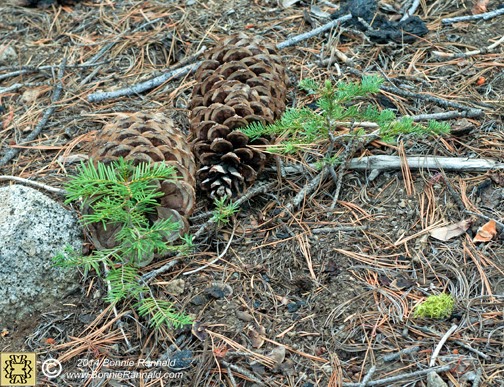
Wildfires can be beneficial to forests by clearing out over-crowded vegetation, thereby creating space for new growth. With all the tiny pines that were thriving in this area, the Rim fire has allowed for a rejuvenation of growth.  Unfortunately this fire was not an act of nature but caused from carelessness which burned 400 sq. miles at a cost of $127 million. 


http://www.bonnierannald.com


Hiking deeper into the cemetery of dead trees, I stood at the base of so many monolithic trees that were still towering over the forest floor.


http://www.bonnierannald.com


Up high from the green canopy a raven cackled as if to remind me to enter with reverence, for it was not only trees that met their demise in this charred forest. 


http://www.bonnierannald.com


Every turn of the camera revealed a different scene with a unique story that immortalized a once thriving life. I was drawn to a young pine that had succumbed to the intense heat, finally resting on its side, with bare branches reaching up.  


http://www.bonnierannald.com


Life amongst death as a bramble bush takes residence against the charred trunk of a once majestic pine.  The hollowed base of the tree will likely become someone's den for the winter.


http://www.bonnierannald.com


One of the most awesome scenes of survival was this mighty Ponderosa pine that was almost cored from the fire, yet still alive and standing tall.


http://www.bonnierannald.com


  The pine's strength and perseverance really touched my emotions. 

http://www.bonnierannald.com


Sap oozing  down from this hollowed out recess in the charred pine gave me impressions of being in a cave.

http://www.bonnierannald.com


 In a small area I noticed a number of round, blackened balls that I think might have been Black Oak Acorns.  Black Oak Acorns were a food staple of the Yosemite Indians.  


http://www.bonnierannald.com


The opportunistic side of nature never ceases to amaze me, some critter has made a home in this hollowed out trunk

http://www.bonnierannald.com

An intriguing scene and I wander if the boulder was cracked by the intense heat?


http://www.bonnierannald.com


A shape beckons me to take a closer look, the abstract form has humanoid qualities and reminds me somewhat of a Hawaiian Tiki Totem 


http://www.bonnierannald.com


In one of the most devastated areas of the fire a huge pine lays stretched out for many meters.


I can only imagine how many years this tree had been growing. 


http://www.bonnierannald.com
 

 Over time and like with the Titanic, nature will reclaim what is left of this hull, leaving only a layer of mulch and some charred bark. 


http://www.bonnierannald.com


New growth accents the landscape and Lupines are beginning to grow on the forest floor. 


http://www.bonnierannald.com


 A destroyer of living matter, the fire leaves in its wake abstract creations, the outline of a heart catches my eye in the upper section of the trunk.


http://www.bonnierannald.com


 Intricate shapes accent the landscape,  nature's Biomorphic creations that are charred and appear as if decorated with Pryographic designs. 


http://www.bonnierannald.com
  
 
All over this land where the dead have come to rest lies a tribute to so many once thriving lives.  As I begin to retrace my steps and make my departure, I feel blessed that I have been given such an opportunity to experience this touching side of nature. 


http://www.bonnierannald.com


 The seasonal change of winter is coming soon and one never knows what changes it might bring to this unique memorial site. Maybe I'll return again after spring's thaw.


http://www.bonnierannald.com


What an exciting and interesting photo-adventure this day has been.  I love it when I am drawn to an area and not knowing what to expect I get treated to new experiences. 

Sign up and follow my blog to see where my next photo-adventure will be!


Photography places me in the moment where I can share that moment in time. It becomes a life story as represented by my interaction with the scene. The happiness and beauty or the sorrow and strife; how I focus leaves a lasting impression that might touch the viewer on a spiritual level.


 "Reflecting Nature's Artistry" 


Many of these images are available on my website:

 http://www.bonnierannald.com/ 

For custom matted and framed images:
Off The Wall


No images on this blog are within Public Domain or are available for free download. 

 All rights reserved, world-wide and images protected by Digital Millennium Copyright Act (DMCA). All photography, graphics, text, design, and content is copyrighted by Bonnie Rannald and should not be copied, down-loaded, transferred and re-created in any way without the express consent, in writing to Bonnie Rannald. For information on Bonnie Rannald licensed, right-managed images, please submit a written request.


Sunday, March 6, 2011

Wildflowers of the Death Valley Area

Death Valley in Bloom

One of the things that I look forward to the most in spring along with the warmer temperatures is when wildflowers start to bloom and the desert is carpeted in color. This spring on March 8-10th. professional photographer Karen Linsley and I have designed a Wildflower Photography Workshop in Death Valley where if the conditions are just right the desert will come alive with numerous wildflowers.


Getting ready for the workshop, I have written a three part series on desert wildflowers. This week's post is the conclusion and a preview of many of the wildflowers that grow in the Death Valley area.

In order for there to be a good crop of wildflowers in the spring, weather conditions must be ideal over the fall and winter. Many seeds will lay dormant for 10 to 20 years waiting for the soaking rains that are spaced out to wash away the protective coating and when the days have been warmed by the sun, the seeds will quickly sprout. 


On rare occasions all the wildflowers bloom at the same time, attracting the most bees, butterflies, moths and hummingbirds to pollinate the plants and ensure the cycle of life continues. Most wildflowers will continue to bloom, ending when the dry hot heat returns to the desert, usually during the month of June.


Dune Primrose opens in the early evening and closes by late morning to fill the desert night with its sweet aroma. Growing prolifically in open sandy areas or near sand dunes after abundant winter rain, it may carpet the desert floor with its white flowers. 


Palmer Penstemon's pink flowers growing on tall stalks color the desert landscape in such beauty. Also known as the hummingbird plants, the Penstemon have a most delightful fragrance and are found along desert washes during spring and early summer. Its leaves and stems are covered with a layer of wax to prevent moisture evaporation. 


The Sand Blazing Star accents washes and pebbly slopes in the spring with white flowers that are streaked inside with orange lines which are nectar guides to attract bees inward to the pollen.

Desert Globemallow also known as Desert Hollyhock is a favorite food of the Bighorn Sheep. It fills the slopes and flats with numerous orange blossoms in the spring and will grow through out the summer if there is additional moisture.

Purple Mat, known as a "belly flower" because it grows low to the ground, spreads its mat along sandy areas and has a long growing season when there is ample moisture.


Blue Lupines line the banks and washes in higher elevations with their striking color and will continue to bloom without much moisture.

The sweet scented Desert Four O'Clock open their purple flowers in the afternoon and blossom through the night. Found on stony areas and washes, the Four O'clock is a prolific bloomer lasting during the warm weather months.

Sand Verbena, growing at lower elevations, carpets the desert with pink and white flowers in sandy areas and around dunes when there has been abundant rain in the winter.

Desert Dandelion covers the sandy flat areas with a splendor of yellow in spring, but only when the right combination of temperature and rain occurs.


So in just two days, the Death Valley Wildflower Photography Workshop adventure begins. What a rare treat, to be able to walk among numerous wildflowers of yellow, gold, lavender and fuchsia that may have been waiting up to 20 years to bloom. An artist pallet of color adorns the desolate salt and alluvial fans in the 3.4 million acres of Death Valley National Park. 


What an exciting and interesting photo-adventure this day has been.  I love it when I am drawn to an area and not knowing what to expect I get treated to new experiences. 

Sign up and follow my blog to see where my next photo-adventure will be!


Photography places me in the moment where I can share that moment in time. It becomes a life story as represented by my interaction with the scene. The happiness and beauty or the sorrow and strife; how I focus leaves a lasting impression that might touch the viewer on a spiritual level.


 "Reflecting Nature's Artistry" 


Many of these images are available on my website:

 http://www.bonnierannald.com/ 

For custom matted and framed images:
Off The Wall


No images on this blog are within Public Domain or are available for free download. 

 All rights reserved, world-wide and images protected by Digital Millennium Copyright Act (DMCA). All photography, graphics, text, design, and content is copyrighted by Bonnie Rannald and should not be copied, down-loaded, transferred and re-created in any way without the express consent, in writing to Bonnie Rannald. For information on Bonnie Rannald licensed, right-managed images, please submit a written request.